Naturally Distracted: Bugs are Distracting
Naturally Distracted with Kirk Gentalen
So, the other ‘blog like thing’ (BLT) that I ‘do’ in the name of MCHT is called ‘The Vinalhaven Sightings Report’ (VSR). It’s an unpolished, community resource where observers can share their nature stories, sightings and photos/videos from the greater Fox Island archipelagoes. I edit this one, and have been for almost 19 years now. It’s fun and conveniently located here. Check it out!
I really like the VSR. Mostly because it’s cool to learn from the cool stuff people share. Why, just earlier this summer, George Kendrick sent in this photo of a ‘White horned Horntail’ (Urocerus albicornis). I’d never heard of one before either. And neither had George. Exposed to not only a ‘new’ species, but a whole ‘new’ group of insects! By George that VSR is educational!
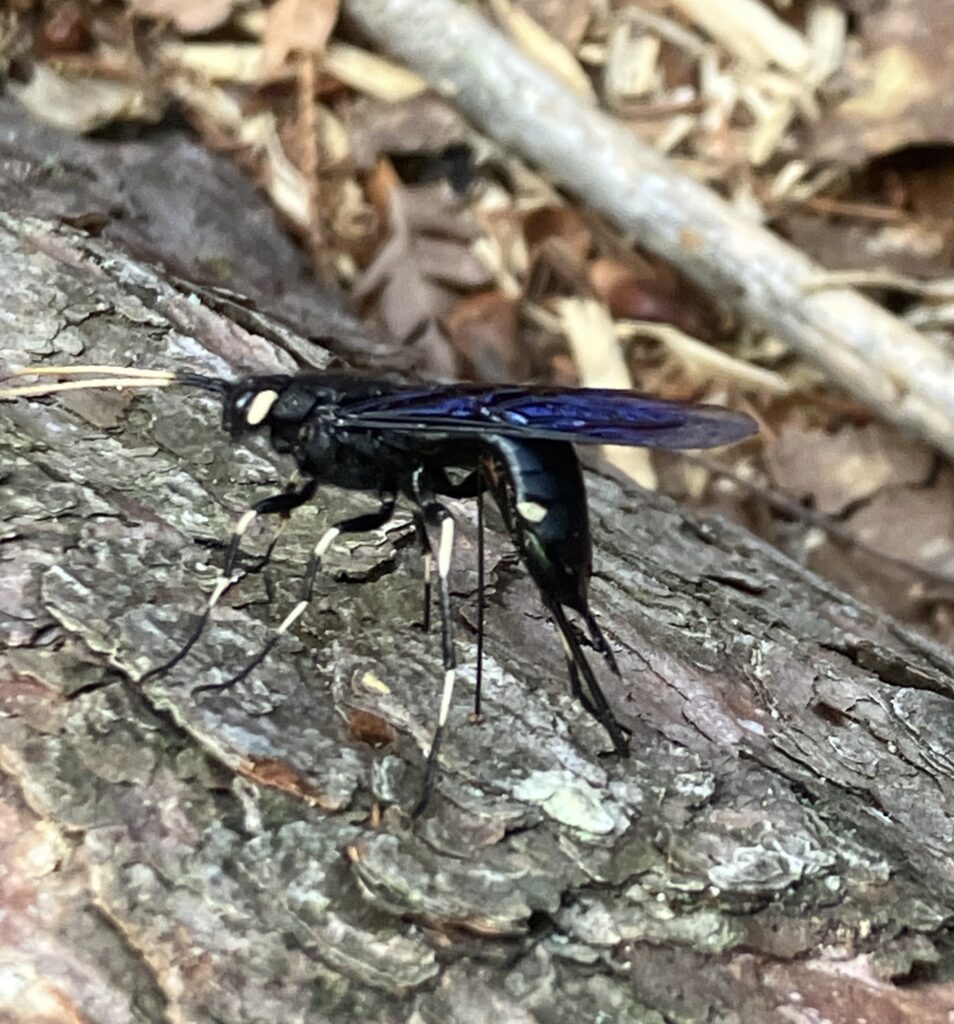
Not too long after seeing George’s photo did I come across a horntail myself. It’s a classic human nature thing – noticing what you recently were made aware of – and to make it even more classic I’ve seen one pretty much every day since!
This particular critter was a ‘Black and Red Horntail’ (Urocerus cressoni). Turns out, Horntails are ‘cool as spraint’. Possibly even ‘cooler than spraint’ – and that is exclusive company (If you are not familiar with spraint, please check out last month’s column). This particular horntail was a female (nice ovipositor!) and the vibrating was an effort to find the right spot to lay her eggs. Her ovipositor has a special ‘hinge’ that allows the horntail to use the appendage to drill into the log, stump, or in this case, a root. In this hole she’ll lay a single egg, while also ‘planting’ a symbiotic fungus that decomposes the wood around the egg. The decomposing wood is food for the future Horntail grub and the fungus is moved from dead log to dead log. Everyone wins with Horntails!
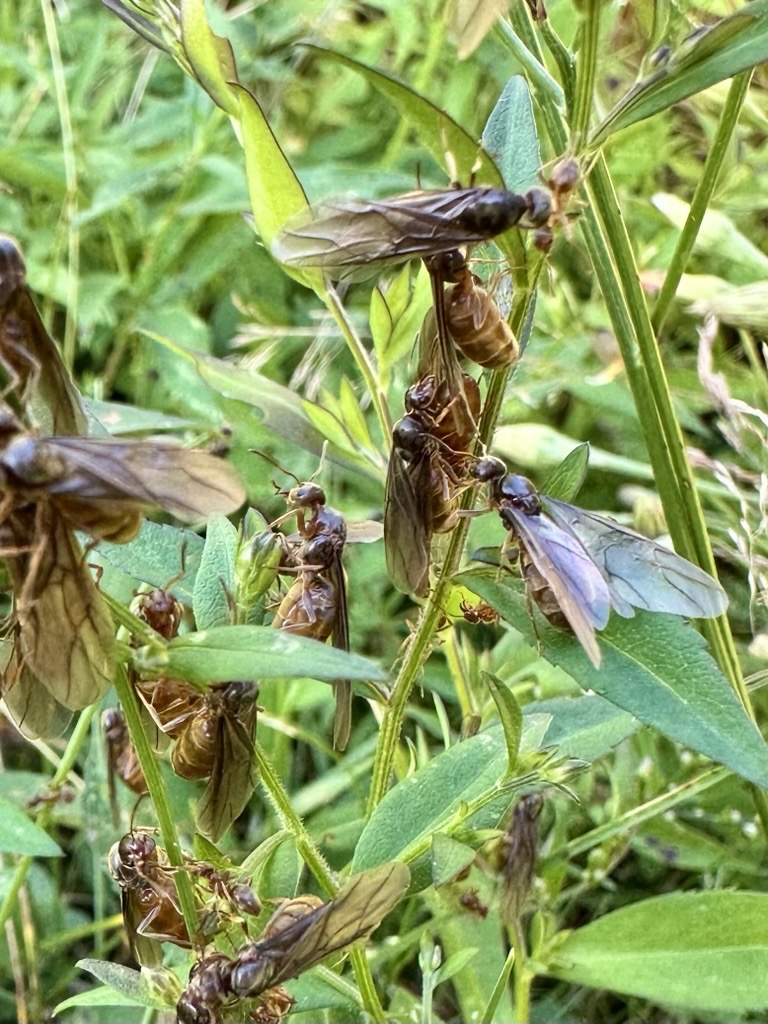
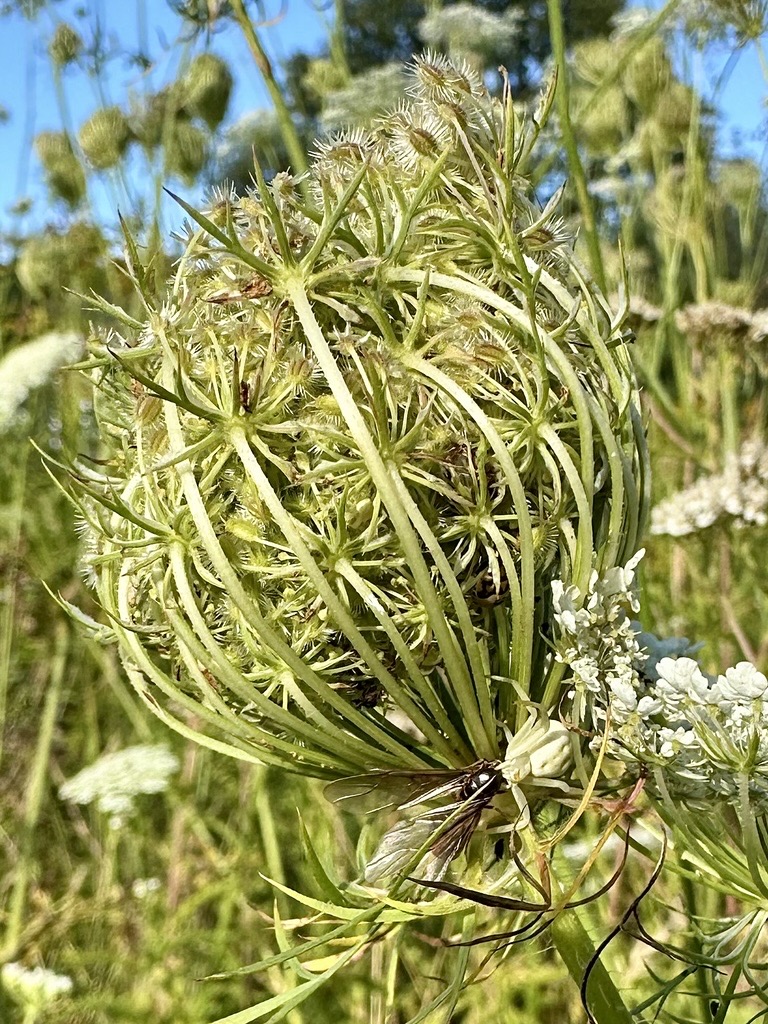
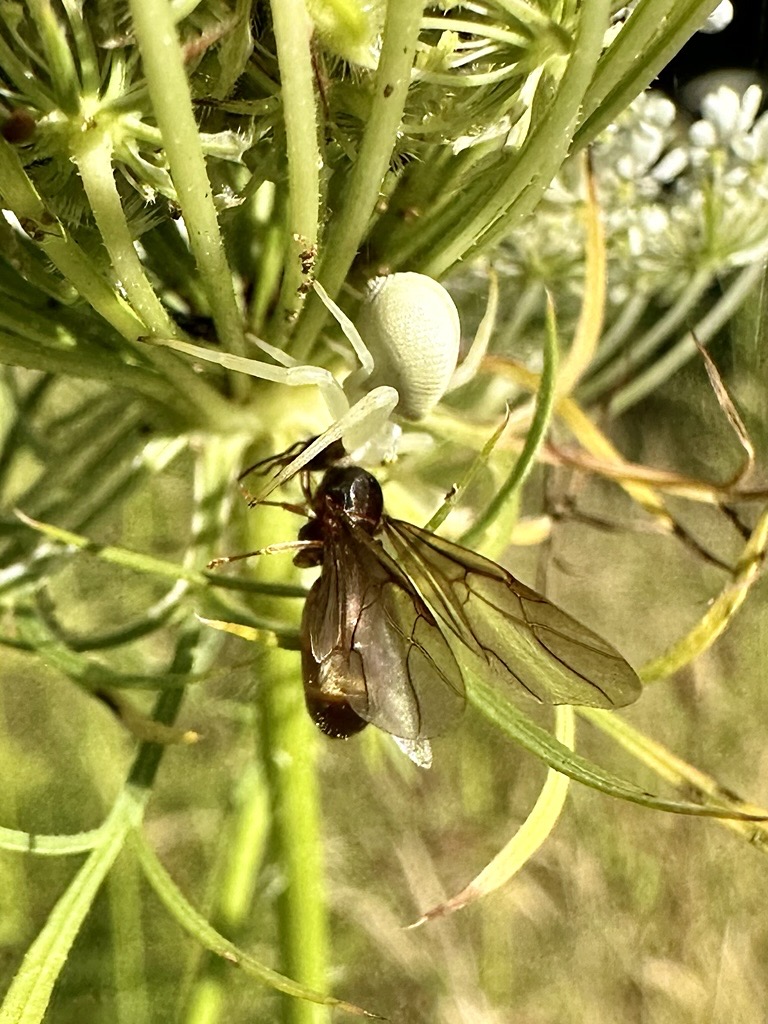
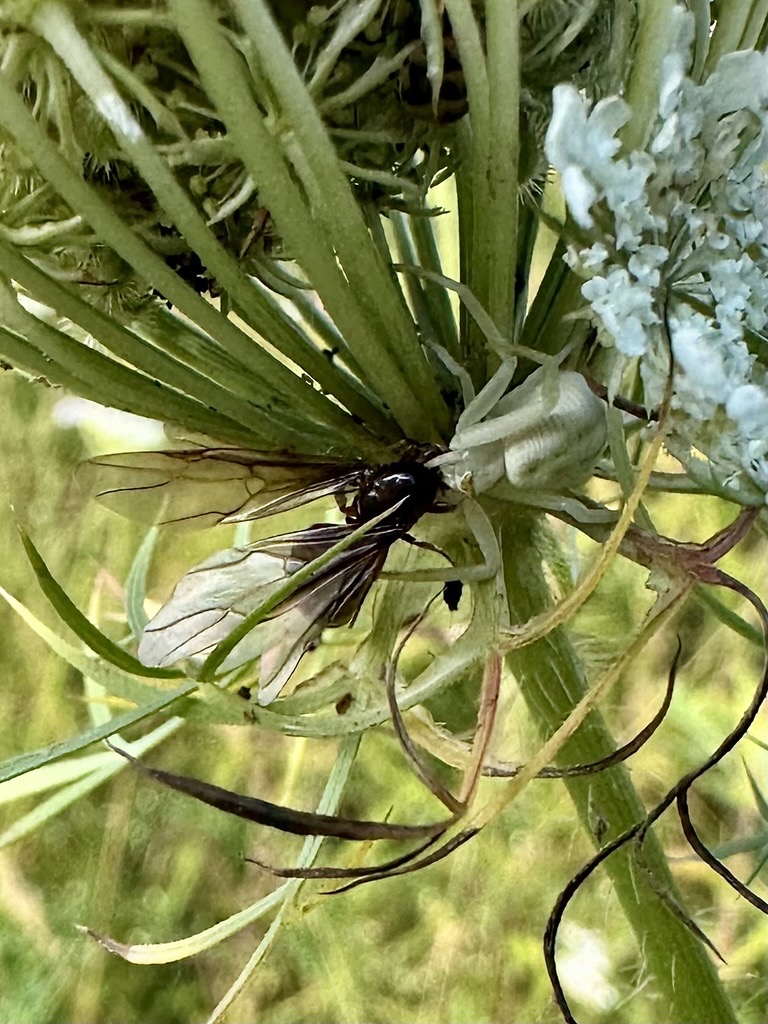
A few afternoons later I was out back of my house and spotted a section of plants and flowers that were literally being covered in insects! Winged Ants! Rising up from the ground in droves, climbing to the apex of whatever plants was closest, and then taking flight! Such is the urge to mate – uncontrollable.