Collaborations

Collaboration Is Key to Everything We Do

Conservation of lands and waters involves people working in collaboration with each other. Maine Coast Heritage Trust (MCHT) has long invested in partnerships, community relationships, and statewide initiatives. Guided by our vision and mission, we are helping to grow the conservation movement in Maine and increase our collective impact in the years to come. 

Our organization collaborates with individuals, communities, other nonprofit organizations, state and federal governments, Wabanaki Nations and entities, and others to advance conservation that meets the challenges Maine faces.

Together, we are working to protect natural areas from overdevelopment, increase public access to lands and waters, return land to Wabanaki Nations, expand national wildlife refuges or parks, increase state land holdings, and mobilize a network of more than 80 land trusts to ensure a heathier future for Maine. 

At the state capitol and through grassroots efforts, we advocate for public policies that protect lands, increase people’s access to the outdoors, and benefit Maine’s ecology and climate. 
Partners 270x315 4
Partners 270x275 3
Partners 270x275 1
Partners 270x315 2

Land Trusts and Land Conservation Organizations

Maine is unique with more land trusts per capita than any other state, and over 80 land trusts with distinct missions and focus areas that are hard at work in their communities, towns, regions, and statewide. National- and internationalscale land trusts and conservation organizations are also at work here

MCHT supports conservation-focused collaboration and learning through work that strengthens all of Maine’s land trusts. This includes sponsoring the annual Maine Land Conservation Conference, facilitating the Maine Land Trust Network, and providing funding opportunities for fellow conservation organizations. In any given year, approximately one-third of land conservation projects involving MCHT staff and resources support other organizations that are playing a lead role in this work.

Other Nonprofits

Nonprofits are key collaborators in the work of conserving Maine lands and waters. MCHT collaborates with other nonprofits in a range of sectors that share our goal of caring for and connecting people to lands and waters on a wide range of projects, including land acquisitions, stewardship, outreach, events, and moreSome examples of these types of collaborations include:   

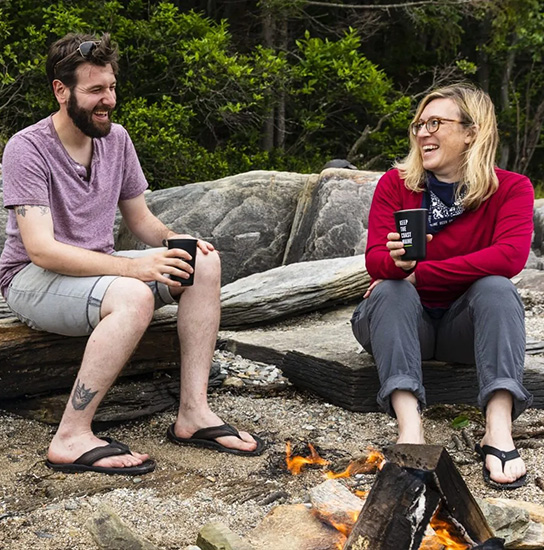
  • Bringing people together on MCHT lands through events, gatherings, and classes in collaboration with Queerly ME. 

Federal Government

Working with federal government partners, we leverage our unique strengths to advance the pace and scale of conservation. Maine has six National Wildlife Refuges, a National Park (Acadia National Park), and a National Monument (Katahdin Woods and Waters).

Over decades, MCHT has played roles in working with federal agencies to build the refuges and assist with land acquisition and care at Acadia National Park. We have secured many millions of dollars in North American Wetlands Conservation Act funding and partner conservation projects, and we collaborate with government committees and agencies on planning efforts around conservation priorities and climate change response strategies.

Spotlight Example: Helping Bring Federal Funding into Maine for Conservation 

Years ago, MCHT instigated a Maine Wetlands Coalition. This coalition brings conservation groups and agencies together around conservation of freshwater and coastal wetlands, and has led the work of compiling collective grant applications each year to secure an important source of funds for conservation work around the state. The collaborative effort has helped Maine shine in a very competitive program and has been key to securing many millions of dollars in North American Wetlands Conservation Act funding for MCHT and partner conservation projects. 

State Government

MCHT is nimble and creative, and has the capacity to support state agencies on land acquisition projects — and we often do. In many cases, MCHT has been able to act quickly to secure places that are eventually transferred to and cared for by entities such as Maine Coastal Islands National Wildlife Complex and the Maine Department of Inland Fisheries and Wildlife, and secured funding from programs such as Land for Maine’s Future for land conservation projects.

Our planning and GIS mapping staff serve in multiple collaborations with government committees and agencies on planning efforts around conservation priorities and climate change response strategies, including Maine Climate Change Adaptation Provider’s Network and Maine’s Climate Change Council. MCHT staff have also assisted or facilitated the process of adding key parcels, acquiring inholdings, and writing grants for funding land acquisition projects.


Wabanaki Nations

There are four federally recognized Tribal Nations in what is now called Maine. Some of MCHT’s work involves collaboration with people working in natural resources and historic preservation. As examples, natural resources department staff at Passamaquoddy Nation in Sipayik have loaned equipment for fish counting to restoration projects, and staff in the natural resources departments of the Mi’kmaq Nation and Penobscot Nations have collaborated with MCHT staff on land projects.

Alongside many other land trust partners and organizations like First Light and the Wabanaki Commission on Land and Stewardship, Wabanaki nations, and Wabanaki-led nonprofits, MCHT works to use skillsets and connections and find resources to help acquire and return land to Wabanaki stewardship and increase Wabanaki cultural access to conserved lands. 

Individuals and Communities

Individuals are important to conservation and always have been. As people, how we take care of land matters. Conservation in Maine has long involved partnerships between individuals and organizations using a tool called a conservation easement. A conservation easement is a voluntary legal agreement between a landowner and a conservation group, such as a land trust or a government entity, to protect land in perpetuity. An important component of the work of MCHT field staff is to serve as a resource for individuals about their options for conserving land.

MCHT is aware that conservation work does not benefit everyone, and has excluded and neglected people and communitiesWe are committed to connecting all people with lands and waters in Maine and seek to collaborate with those who have not benefited or been harmed by conservation historically. Recognizing that specific individuals and communities are uniquely dependent on access to lands and waters to make a living, feed themselves and their families, practice their culture, and pass down traditions, we engage in outreach to harvesters and gatherers, fishers, farmers, hunters, and Wabanaki people and entities, all of whom have valuable connections to and insights about the lands and waters that we all seek to care for

Towns

MCHT staff work in collaboration with municipal officials and staff to assist with land-use solutions that help address the needs of coastal communities. This includes working with towns to secure public access to, and in some cases town ownership of, community forests, beaches, boat launches, and other places that communities enjoy and rely on. As sea levels rise and other climate impacts challenge towns, we also collaborate on climate adaptation strategies that benefit people, plants, and wildlife. 

Island for Birds 420x420
Great Outdoors 420x420
Intern Program 420x420