
Cousins River Fields & Marsh
Yarmouth
Jump to
Guidelines
What You Need to Know
- Carry out all trash (see details)
- No camping permitted
- No fires permitted
- Keep dogs leashed and remove waste
- Stay on established trail
- Stay off marsh to protect the habitat
- Foot traffic and wheelchairs only
- Hunting by permission only
- Respect privacy of preserve neighbors

Why we Care
A Coastal Hero
Roam the preserve’s 1.2-mile trail network of short loops and spurs, winding through meadows, forests, and marsh habitats—with picnic tables and benches inviting you to pause along the way. With Cousins River’s diverse habitat, you’ll want your binoculars to spot the sparrows, warblers, and more avian species while you explore this important ecosystem.
Features
How to Get There
From Route 1 in Freeport (2.2 miles north of Exit 17 in Yarmouth or 1.3 miles south of Exit 20 in Freeport), turn onto Old County Road and head northwest 1.5 miles until you reach Granite Street. Turn left and drive 0.2 miles to the preserve entrance and parking area on the left, immediately after passing the Davis Cemetery.
Explore the Map
View this preserve’s trails and features on the interactive map or download a printable copy above.
Preserve Details
Property:
Town:
County:
Accessible:
Field Notes
Getting to Know Cousins River Fields & Marsh
The Path to Conservation
MCHT acquired the Cousins River Fields & Marsh Preserve in 2023, with support from the U.S. Fish and Wildlife Service’s North American Wetlands Conservation Grants Program, the Town of Yarmouth, and from many generous private donors. The purchase was part of a partnership conservation project, involving the Freeport Conservation Trust and the Royal River Conservation Trust.
On the Preserve
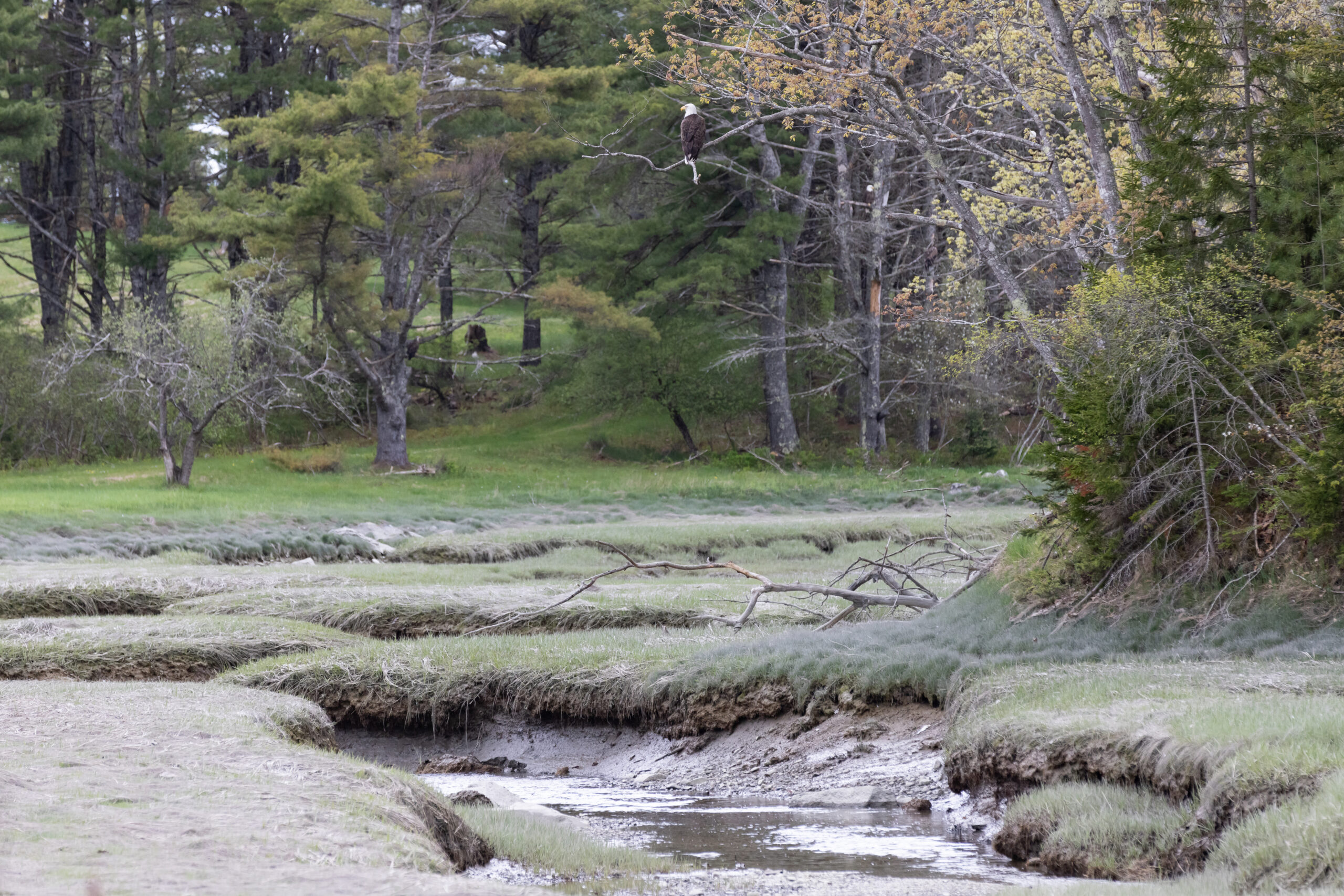
Cousins River Fields & Marsh Preserve includes a mix of fields, upland forests, and salt marsh. Used for more than a century as pasture and for hay production, the property’s 19 acres of fields have decreased in recent decades. However, evidence remains of past activities, including a granite foundation of a historic barn in the northern field.
Today, the meadows are being managed to preserve this open habitat feature and minimize invasive plants. Upland forests cover more than 43 acres, dominated by pine-oak but also some stands of early-successional aspen and birch. The preserve’s signature feature, salt marsh grass, covers over 18 acres with several gullies draining into it. This coastal wetland is part of a larger marsh system with multiple owners.
Due to the preserve’s diverse habitats, it attracts many types of wildlife. Deer and turkey are common in the fields and woodlands. Resident and migratory songbirds can be found throughout the property. Look for salt marsh sparrows, as well as wading birds, such as herons and egrets, feeding in the marsh.
Preserve Trails
Tidal Falls Trail
Surface Type: Packed stone dust and wooden bridging.
Trail Width: There is significant variation ranging from 34 to 92 inches, dependent upon the terrain and any barriers present.
Slope Conditions: Running slopes range from 2.1% to 32%, while the cross slope varied between 0.1% and 15.8%.
Distance: The Tidal Falls Trail is approximately .2 miles long, beginning approximately 225 feet from the parking area.
Notes: While the surface of the Tidal Falls Trail does make navigation easier, the steep slopes may require assistance for some mobility device users.
North Field Loop and Alder Field Loop
Surface Type: Mowed field grass
Trail Width: The width is a constant 72 inches.
Slope Conditions: Running slopes range from 2.1% to 32%, while the cross slope varied between 0.3% and 37.9%.
Distance: The North Field Loop is approximately .3 miles long, beginning directly from the parking area. The Alder Field Loop is approximately .5 miles long, beginning just across the driveway from the parking area.
Notes: The field trails are largely unshaded and can be hot on full-sun days.
Hemlock Point Trail
Surface Type: Forest floor, roots, & rocks.
Trail Width: The width ranges from 36 to 60 inches.
Slope Conditions: Running slopes range from 4.6% to 33%, while the cross slope varied between 1.7% and 24.1%.
Notes: The trail surface is largely unimproved along this trail, roots and unpacked forest floor may be challenging or even prohibitive for some mobility device users. Steep slopes may require assistance for some mobility device users.
Marshes in a Changing Climate
Marshes, like the one at Cousins River Fields & Marsh Preserve, provide daily benefits to people and wildlife. These highly productive ecosystems keep our environment cleaner and safer, and they are essential habitat for countless species: many of Maine’s commercially harvested fish, shellfish, and baitworm species spend some portion of their life cycle in marshes.
Tidal marshes protect our communities by acting as sponges, soaking up storm surge and reducing flood damage and erosion, saving the state millions of dollars annually. They keep our water clean by filtering out excess nutrients and other harmful chemicals, and they are extremely effective at storing carbon and keeping it out of the air we breathe—as much as 10 times more effective that Maine forests per acre!
By protecting marshes and land surrounding them, and by restoring marshes to ensure they’re functioning properly, we can make it possible for marshes to migrate inland and reestablish themselves as sea level rises. Conservation of Maine’s marshes has an outsized impact on the health of the Maine coast and is key to strengthening our natural climate change resilience. Learn more by reading about our Marshes for Tomorrow Initiative.

You can help increase accessibility at Cousins River. We’re fundraising to add a mile of accessible trail and amenities at this preserve. We want to ensure conserved lands and outdoor experiences are truly open to all.
More Information on Cousins River
Help Us Take Care of the Preserve
This preserve belongs to all of us; that’s why it’s important to leave as little trace as possible when you visit.
To do that, please:
- Carry out all trash
- Carry out all pet waste
- Carry out all human waste (including toilet paper)
Stories from Southern Maine
Estuaries: Where Fresh Water and Salt Water Meet
National Estuaries Week is September 19 – 27, 2026. Let’s talk about these incredibly productive ecosystems, how Maine Coast Heritage Trust is helping to keep them healthy, and what you can do to support estuaries.
Be part of the movement

Contribute to a future with
healthy, open lands & waters
Donate Now

Give your time to help
care for the coast
Volunteer Now

Be a champion
for conservation
Spread the Word