Nature Connects: Mesgilg Maqamigew: Returning “big land”
Last month, the Mi’kmaq Nation acquired its largest contiguous landholding yet, advancing a historic movement to return land and its care to Wabanaki Nations.
By Brett Ciccotelli and Shannon Hill | July 2026
Scattered across what is now Aroostook County is a patchwork of lands held and cared for by the Mi’kmaq Nation. These properties are small farmfields, residential developments, woodlots, administrative buildings, little bits of lake and river front, and a portion of the decommissioned Loring Air Force Base. They are small pieces of a historic territory that stretched east to the Atlantic Ocean.
Today, these places provide the Nation and its citizens with a strong foundation where they have built homes, created community gathering spaces, manage a thriving vegetable and fish farm, steward woodlots for sawlogs and maple sugar, run a strong Tribal government, and co-steward lands with the United States Fish and Wildlife Service.
But what’s been missing has been land to care for at landscape scale — a scale that provides room for hunting, fishing, and the work it takes for the land and people to thrive.
That began to change last month when the Nation acquired 3,400 acres of forest, wetland, and streams. This new property, called Mesgilg Maqamigew, is located in Bridgewater, not far from the Nation’s cemetery. Mesgilg Magamigew not only more than doubles the land held by the Mi’kmaq Nation, it is also the biggest, contiguous land mass the Mi’kmaq Nation has the opportunity to hold and steward. This is why the Nation calls this place Mesgilg Maqamigew, meaning “big land.”
Held within the “bigness” of Mesgilg Maqamigew are forest, fields, wetlands, and miles of South Whitney Brook known locally for its brook trout. Mesgilg Magamigew is nestled between the two largest populations of Mi’kmaq citizens (Houlton/Littleton and Presque Isle /Caribou) and is located only a mile off Route 1, making it very accessible to the Nation’s citizens.
The size and accessibility of this land make it a place rich with possibilities for practicing culture. Until now, Tribal members have been confined to the small parcels scattered across the County — with only the hope that animals or important plants would happen to pass through or grow within the tight boundaries of checkerboard land holdings. With Mesglig Maqamigew, the Nation’s citizens now have the chance to listen, understand, and work with the land. They can care for it to encourage moose to stay, and fiddleheads and brown ash to take root and grow.
The return of this place — landscape changing in itself — to the Mi’kmaq Nation is also part of a larger movement to return land and the care for it to Wabanaki Nations. This is the sixth completed project in the Tributary Land Returns, a collaboration between the five federally recognized Wabanaki Tribes and seven non-native organizations, to return over 50,000 acres to Wabanaki communities across 11 different projects.
The Tributary Land Returns are one of the largest returns of private land in the history of the United States and are only possible through teamwork of the First Light community and growing trust between it and the Wabanaki Commission on Land and Stewardship and Wabanaki Nations. These communities are showing up for each other and are slowly changing our homeground as more and more places return to Wabanaki holding and care.
About the Authors:
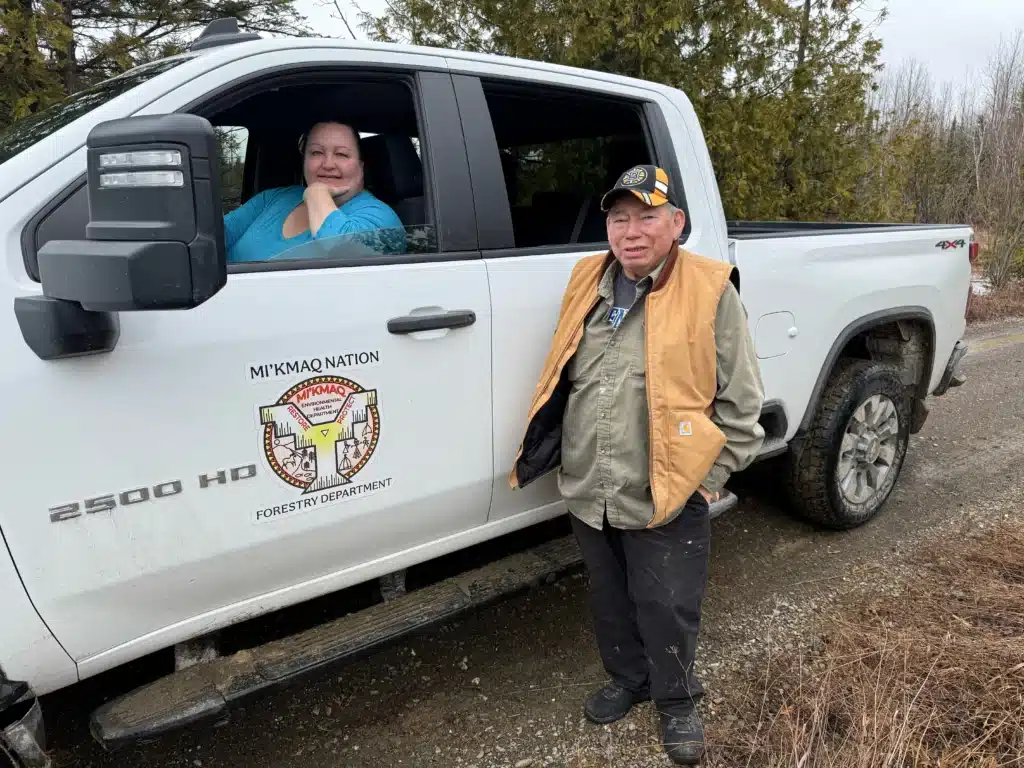
Brett Ciccotelli is the tribal land recovery manager for First Light. Shannon Hill is the environmental health director for Mi’kmaq Nation.
“Nature Connects” is a monthly column showcasing conservation stories from people and organizations across Maine. To learn more or suggest story ideas, email reply@mcht.org.