Fish Friends: Connecting Students with Coastal Ecosystems
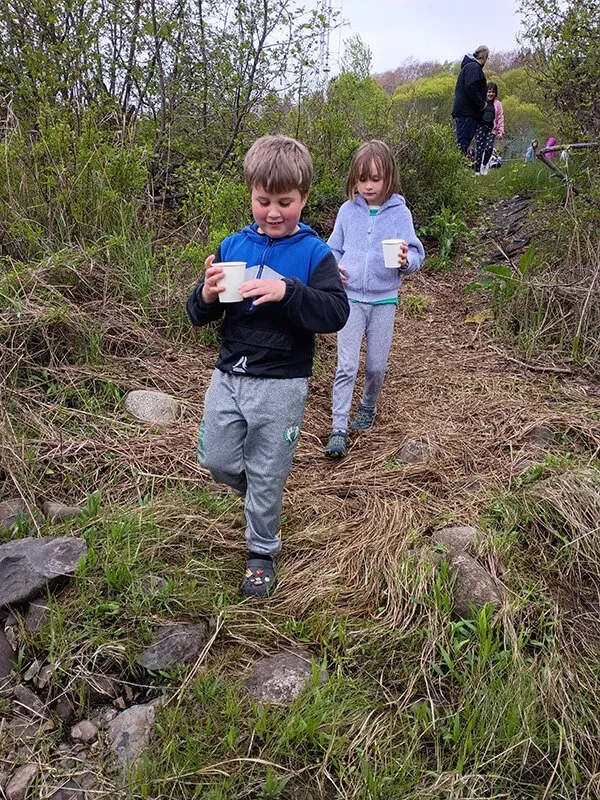
This spring, more than three dozen students from Lubec and Whiting gathered on the banks of the East Machias River to release Atlantic salmon fry into their native habitat. The students and their teachers cheered as they carefully dipped cups of 1-inch-long fry into the river, where the young fish will remain for a few years before growing large enough to venture out to sea.
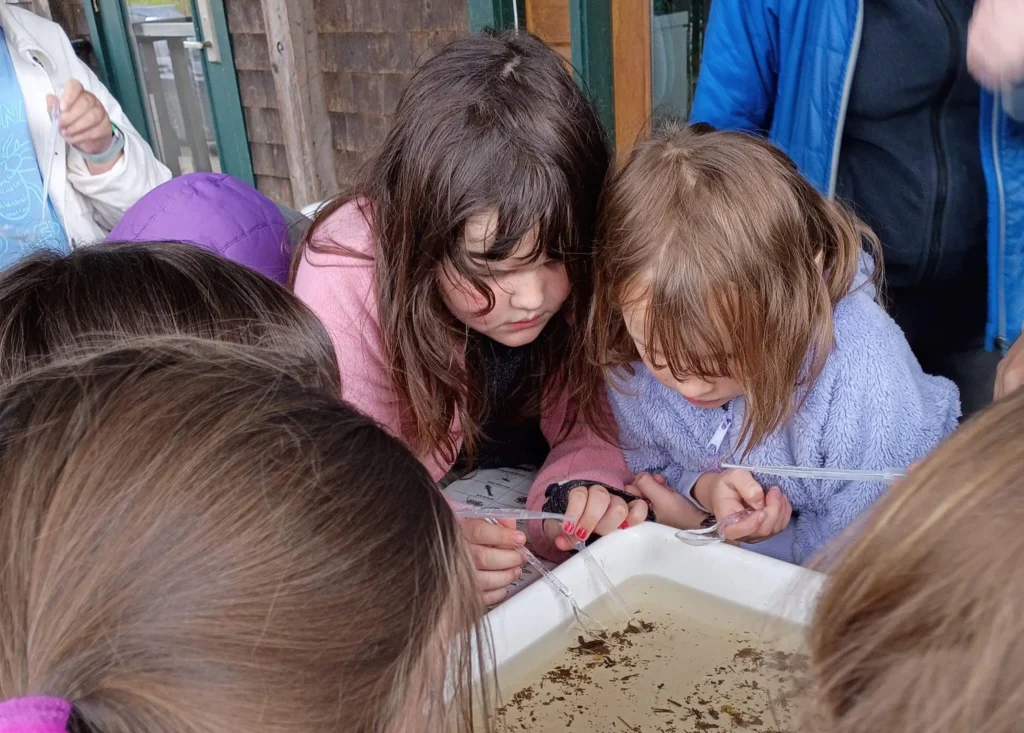
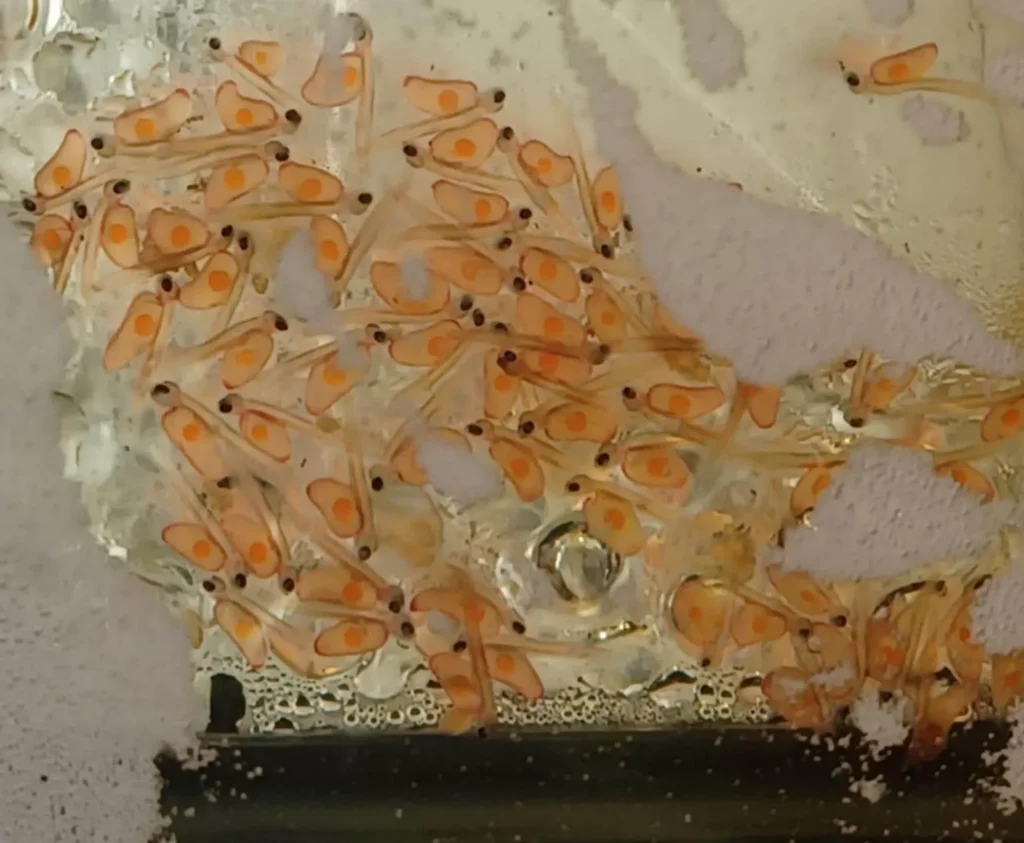
The celebratory release concluded this year’s Fish Friends program—an initiative of the Atlantic Salmon Federation designed to help students learn about the life cycle of this endangered species and the challenges they face along Maine’s coast. Participating classrooms each receive a tank of 200 Atlantic salmon eggs that they raise over the course of several months by regularly cleaning tank water and maintaining water temperatures that mimic natural stream conditions. Come spring, the students bid their fish friends farewell with a deeper understanding of local ecosystems and the roles humans can play in managing fisheries and coastal habitats.
Lookabaugh introduced Fish Friends to 2nd and 3rd graders at the Whiting Village School in 2024 as part of MCHT’s Rivers Initiative, an effort to protect and restore sea-run fish habitat along Maine’s coast. This year, Lookabaugh returned to the Whiting Village School and expanded the program to the Lubec Community Outreach Center, where she worked with after school students ranging from kindergarteners to 8th graders.
Between February and May, Lookabaugh and her colleague Kyle Winslow, conduct monthly visits to participating classrooms to introduce the students to the basic ecology of Atlantic salmon and to lead them through interactive games. In one role-playing game, students “become” salmon and enter an obstacle course where they come up against a dam (a jump rope station), along with predators and fishing boats (other students). The simulation helps the students think more critically about the realities of being a sea-run fish in a built environment, and the ways that we as humans can modify our structures to support this species—including, for example, by removing dams, managing predator species, and considering the role of resource management in endangered species restoration.
“They get excited that they get to be a part of this bigger project,” says Cathy Lookabaugh, MCHT’s Community Outreach Manager for Washington County who helped bring the program to this region last year. “They really start to think about what they can do as individuals, or when they grow up, and how they can make a difference.”
“It’s getting them to think about the bigger picture of the ecosystem health, and I think they are connecting the dots,” Lookabaugh says.
Beyond the Atlantic Salmon Federation, MCHT also partners with the Downeast Salmon Federation to assist with the final release of the fry, and to lead students through a tour of their hatchery on the East Machias River.
Over the coming years, students will witness the power of modifying structures for the benefit of fish as a dam at the mouth of the Orange River—located across the street from the Whiting Village School—is restored and a fish ladder installed to allow migratory fish species back to the Orange River watershed for the first time in many years.
–
The Orange River watershed is one of five focus areas of MCHT’s Rivers Initiative. Learn more about this state-wide effort to protect and restore coastal rivers, which has an outsized impact on the health of communities in Maine and the region at large.