Old Pond
Hancock
Jump to
Guidelines
What You Need to Know
- No camping permitted
- No fires permitted
- Carry out all trash (see details)
- Keep pets under control
- Respect privacy of preserve neighbors
Why we Care
A More Resilient Habitat
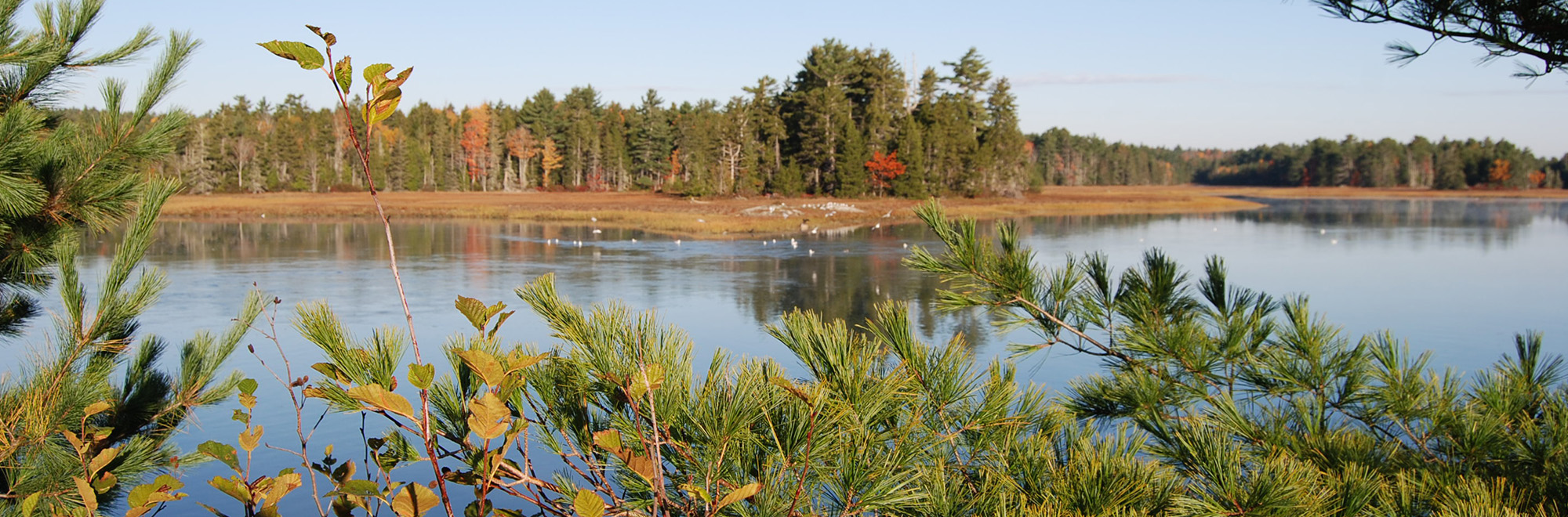
Head into Old Pond Preserve for a day of exploring and birdwatching in an evolving ecosystem. Follow the wide hiking trail for a little more than a half mile to a picnic table overlooking the extensive marshland, or take the shorter, more rustic path that winds 0.2 miles along Carrying Place Inlet. No matter your route, you’ll be able to scan the landscape for abundant wildlife, including many resident and migratory birds.
Features
How to Get There
From the US Post Office in Hancock, follow Route 1 west for 0.7 miles. Turn left onto Old Route 1 immediately after crossing Carrying Place Inlet. Drive 0.1 miles to the preserve’s small parking area on the left.
Explore the Map
Click on trails and landmarks to learn more about what Old Pond has to offer.
Preserve Details
Property:
Town:
County:
Accessible:
Field Notes
Getting to Know Old Pond
The Path to Conservation
MCHT acquired the western portion of the Old Pond Preserve in 2017, thanks to a bargain sale from the previous landowner and funding from the Maine Natural Resources Conservation Program and the Crabtree Neck Land Trust. Funding from the Federal North American Wetland Conservation Act (NAWCA) supported acquisition of the preserve’s eastern parcel in 2016.
On the Preserve
Perhaps the most significant natural resource on the preserve is the 19 acres of high-value spartina saltmarsh (part of a larger 54-acre system fringing Old Pond). Saltmarsh hay and black rush cover most of the marsh, with smooth cordgrass present where there is more tidal variation. The upper reaches of the marsh transition to vegetation typical of brackish, then ultimately, freshwater conditions.
A narrow band of forested wetland flanks the small stream channel, featuring typical species like red maple, winterberry, and speckled alder. The forested upland is a mix of red spruce and balsam fir, with pockets of northern white cedar and white pine. Further north, the forest transitions to hardwoods like red oak, red maple, and big-toothed aspen. What appears to be an island in the southern part of the spartina saltmarsh is actually a bedrock outcropping supporting white pine, bracken fern, huckleberry, and low-bush blueberry.
The preserve’s salt marsh is home to important tidal waterfowl and wading birds. Additionally, keep an eye out for a diverse range of wildlife, including white-tailed deer, bald eagles, harbor seals, otter, mink, black bear, moose, coyote, and numerous passerines and shorebirds.
Restoring the Marsh
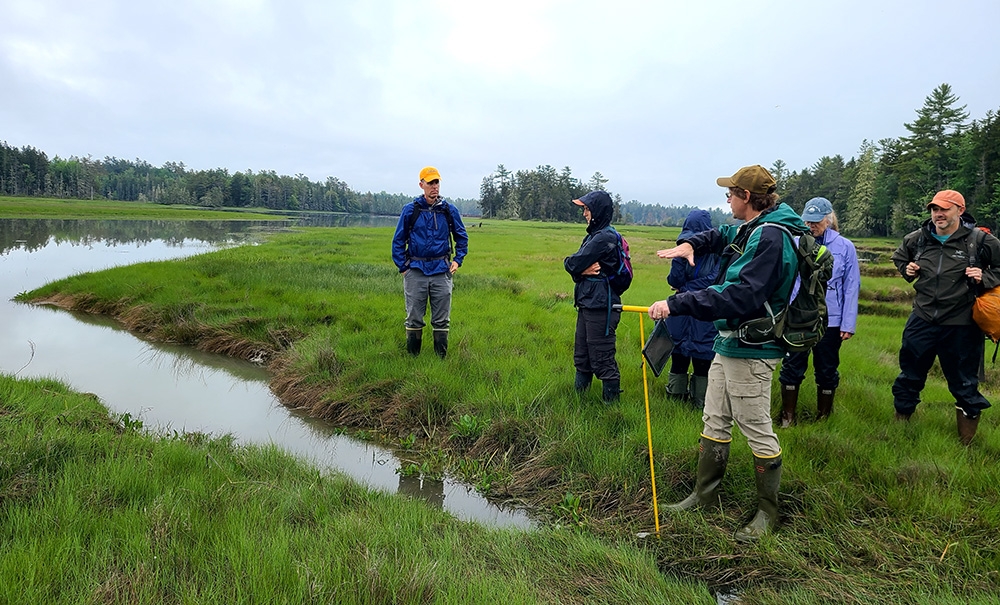
Historically, Old Pond Marsh was farmed for salt hay by colonial settlers in the 18th and 19th centuries. Agricultural legacies left on the marsh caused unwanted pooling, which over time led to the loss of marsh vegetation. With the help of partners like the Maine Natural Resource Conservation Program (MNRCP), MCHT is now working to restore the marsh’s natural function and hydrological patterns. This work is vital to making the marsh more resilient to climate change.
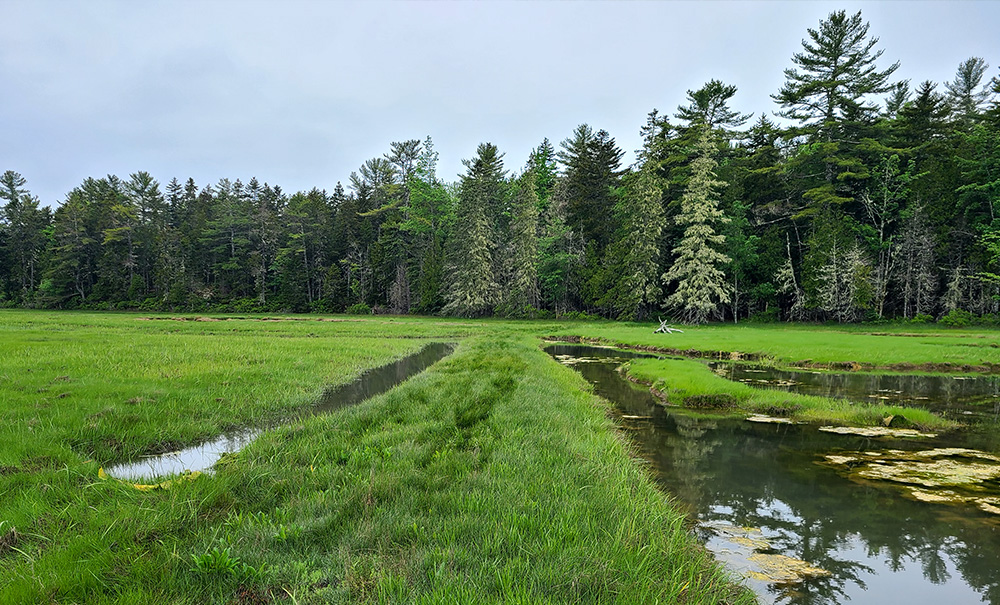
Since March 2024, Geoff Wilson of Northeast Wetland Restoration has been working to reinstate proper hydrology to the system. This is done by digging a network of runnels—shallow and wide swales—that allow water to properly flow on and off the marsh. To minimize impact, the small excavator used for digging rests on large wooden mats, making its weight virtually undetectable on the marsh surface.
Thanks to these runnels, places on the marsh that once had standing water are now draining with each tide—exactly how they should be. These stagnant areas, known as megapools, are harmful to essential marsh functions like thriving plants, wildlife habitat, carbon sequestration, and coastal resiliency.If you have any questions, please contact Tatia Bauer.

Stories from Mount Desert Island
Deepening Our Connections to Nature and One Another
Our stories remind us why we commit ourselves to the work of conservation. Here in Maine, nature is still big and bold enough to remind us that we are part of it. We want to make sure this remains true.
Be part of the movement

Contribute to a future with
healthy, open lands & waters
Donate Now

Give your time to help
care for the coast
Volunteer Now

Be a champion
for conservation
Spread the Word
More Information on Old Pond
Help Us Take Care of the Preserve
This preserve belongs to all of us; that’s why it’s important to leave as little trace as possible when you visit.
To do that, please:
- Carry out all trash
- Carry out all pet waste
- Carry out all human waste (including toilet paper)