
Little Whaleboat Island
Harpswell
Jump to
Guidelines
What You Need to Know
- Camp at established campsites (with restrictions)
- Campfires permitted (guidelines below)
- Carry out all trash (see details)
- Keep pets under control
Why we Care
A Place Worth Protecting
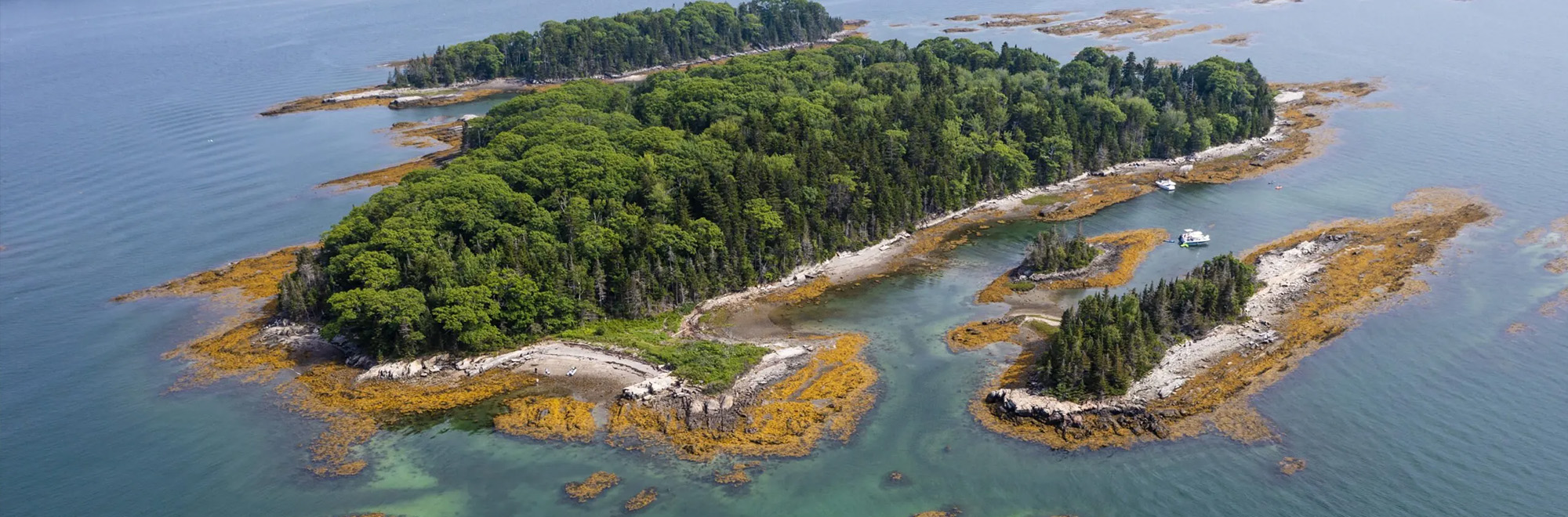
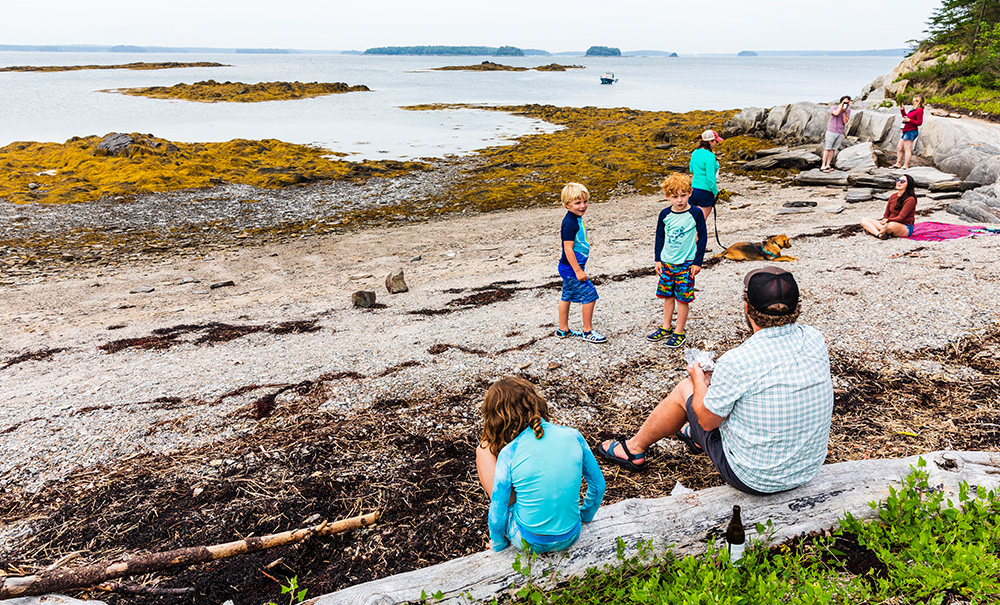
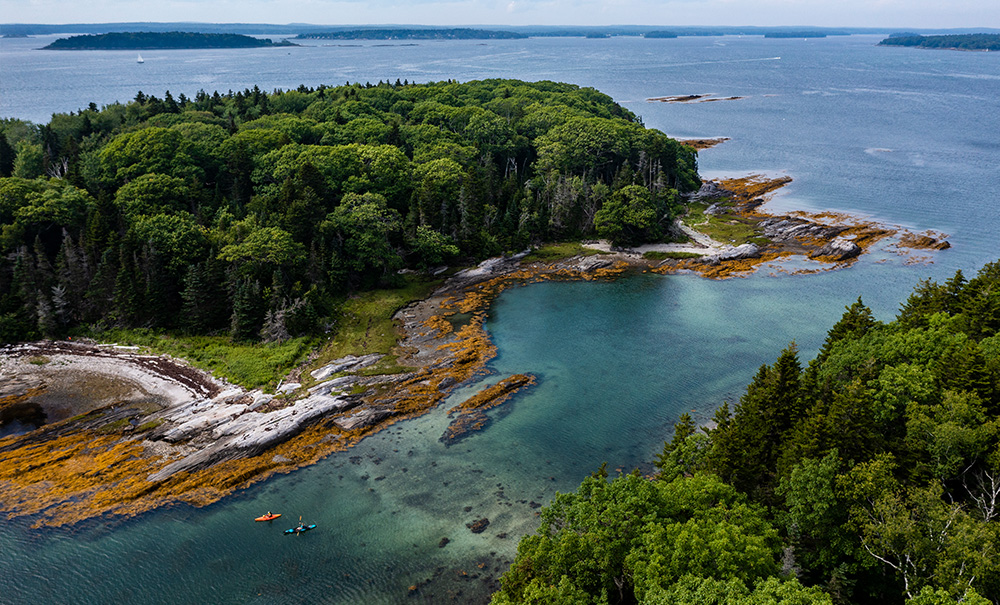
This 22-acre preserve invites exploration with its scenic spruce-fir forest and rugged shoreline. From nesting osprey and bald eagles overhead to seals and other marine life just offshore, Little Whaleboat offers a chance to experience a stretch of Maine’s bold coast—unspoiled and protected for generations to come.
Features
How to Get There
From the Mere Point Public Boat Launch, proceed southeast to the east side of Upper Goose and Lower Goose Islands. When Mitchell Field on Harpswell Neck is on your left, Little Whaleboat is approximately 1.5 miles southwest. The best landing beaches are on the northwest corner. The best anchorage is off the northeast side, east of islets Nate and Tuck.
A few things to note:
- Beware of significant ledges to the northwest and south of the island.
- All moorings are privately owned and not for public use.
- Little Whaleboat Island East is privately owned and not part of the preserve. Respect private property boundaries and do not cross the sandbar.
Explore the Map
View this preserve’s trails and features on the interactive map or download a printable copy above.
Preserve Details
Property:
Town:
County:
Accessible:
Field Notes
Getting to Know Little Whaleboat Island
The Path to Conservation
MCHT purchased the Little Whaleboat Island Preserve in 2021 with wide-spread financial support from a generous anonymous donor and hundreds of others including Paul’s Marina and Maine Beer Company.
On the Island
Little Whaleboat Island is a 22.2-acre island with approximately 1.5-mile shoreline in Casco Bay. It is part of a cluster of islands located southwest of the Goslings and west of Whaleboat Island.
The islets of Nate and Tuck (west of the island and a part of the preserve) and the adjacent Little Whaleboat Island East (privately held and not part of the preserve) are barred at very low tides across a fine pebbles and sandy mud surface. Portions of the generally rocky shoreline and areas in-and-around the ledges/islets are classified as aquatic bed wetlands, featuring plentiful floating and submerged vegetation. Various types of seaweed and eelgrass are present.
The island hosts a typical spruce-fir forest community. Bald eagles, osprey, and great blue herons have nested and/or established rookeries on the island in the past (south end of island) and similar instances of these nesting bird species have been located on islands in the general vicinity in recent years.
Please avoid the southern end of the island before July 31st so we can protect the nesting birds who call the island home.
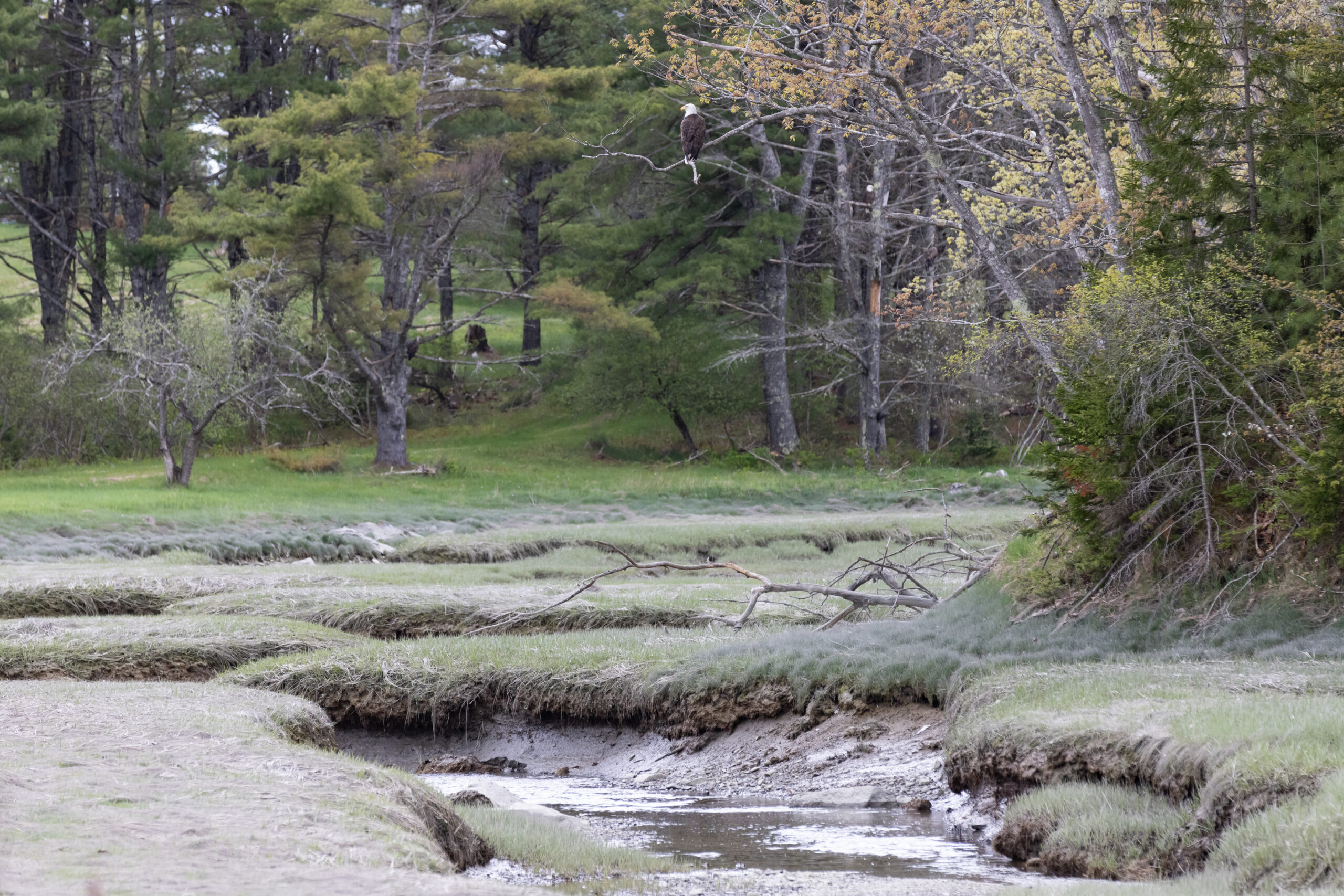
Stories from Southern Maine
Estuaries: Where Fresh Water and Salt Water Meet
National Estuaries Week is September 19 – 27, 2026. Let’s talk about these incredibly productive ecosystems, how Maine Coast Heritage Trust is helping to keep them healthy, and what you can do to support estuaries.
Be part of the movement

Contribute to a future with
healthy, open lands & waters
Donate Now

Give your time to help
care for the coast
Volunteer Now

Be a champion
for conservation
Spread the Word
More Information on Little Whaleboat Island
Camping on the Island
Low-impact camping is allowed only in the two designated sites on the island, which are linked by a short trail.
Campers should exclusively use the platforms (2-12’x12’ at east site, 3-8’x8’ at north site) and avoid camping on the ground to prevent campsite compaction and sprawl.
Limit stays to two nights. Groups larger than 8 people and all commercially-guided trips require permission from MCHT; please call 207-729-7366 or email our Stewardship Team.
Campfires on the Island
- Recreational fires less than 3’ in width and height are permitted below the high tide line.
- No fires are allowed in campsites or above the high tide line.
- Do not cut standing dead trees for firewood, bring out-of-state wood or construct fire rings.
- Leave no fire unattended. Completely extinguish all fires.
Help Us Take Care of the Preserve
This preserve belongs to all of us; that’s why it’s important to leave as little trace as possible when you visit.
To do that, please:
- Carry out all trash
- Carry out all pet waste
- Carry out all human waste (including toilet paper)