Clark Island
Saint George
Jump to
Guidelines
What You Need to Know
- No vehicles on causeway
- Wheelchairs permitted—use caution
- No camping permitted
- No fires permitted
- Keep pets under control
- Respect private property
- Yield to vehicles on road
- Carry out all trash (see details)
Why we Care
Where History Meets Exploration
Clark Island has been cleared, quarried, and reshaped—but its beauty endures. Today, it’s a place to hike 1.8 miles of shoreline trails, swim from granite-framed beaches, spot songbirds overhead, and picnic with a spectacular sea view. Whether you’re looping past the old quarry or scanning the waves for sea ducks, every visit connects you to a landscape still evolving.
Features
How to Get There
From the junction of Routes 1 and 131, east of downtown Thomaston, head south on Route 131. Drive 5.3 miles, turn left onto Route 73. In 0.9 mile, bear right onto Clark Island Road. Continue 1.4 miles to the Craignair Inn and Restaurant. Please drive very carefully and under the 25 mph speed limit.
Please note: Parking is limited and not allowed outside of designated spaces. Carefully review options and instructions below.
Explore the Map
Click on trails and landmarks to learn more about what Clark Island has to offer.
Preserve Details
Property:
Town:
County:
Accessible:
Field Notes
Getting to Know Clark Island
The Path to Conservation
Maine Coast Heritage Trust acquired the Clark Island Preserve in 2020 with support from the US Fish and Wildlife Service’s Coastal Wetlands Program and many donors.
On the Island
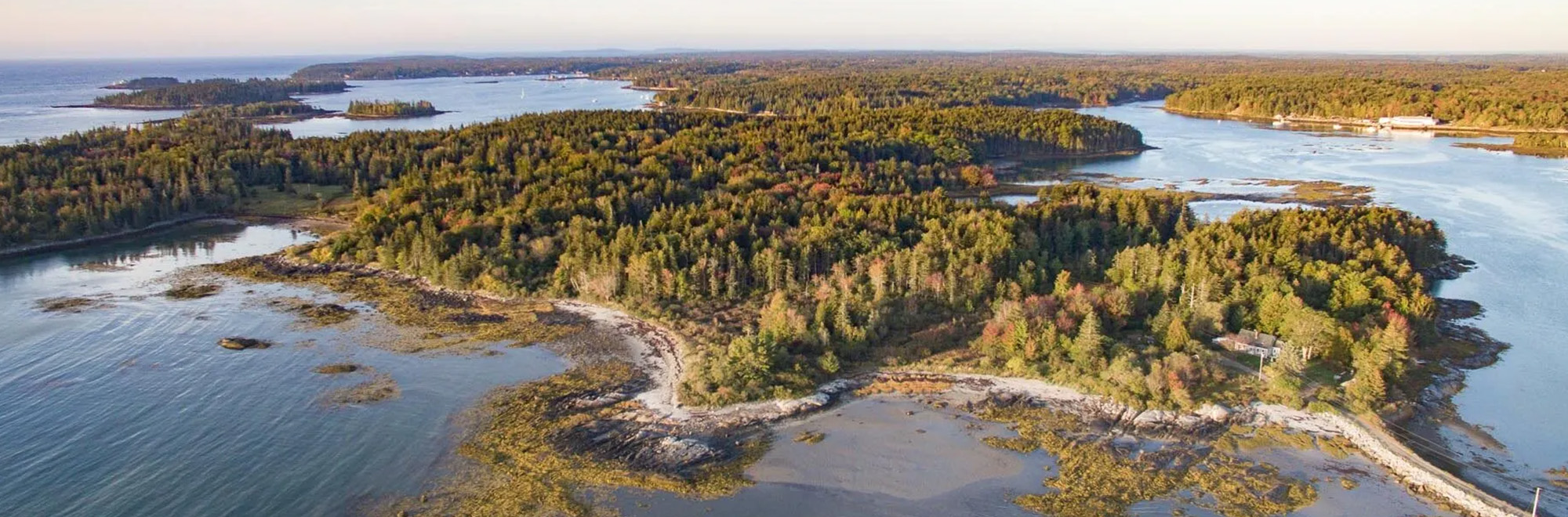
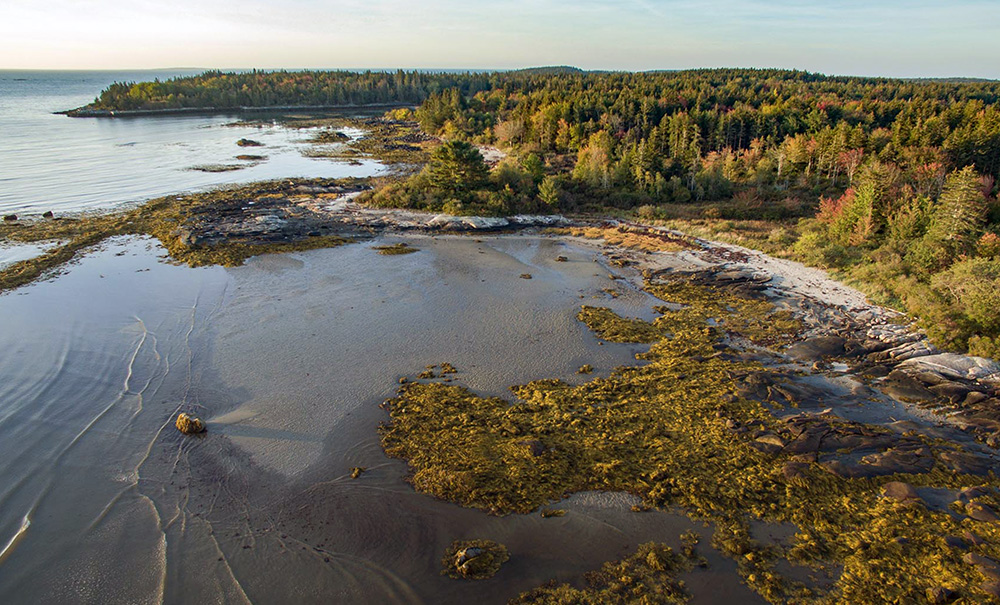
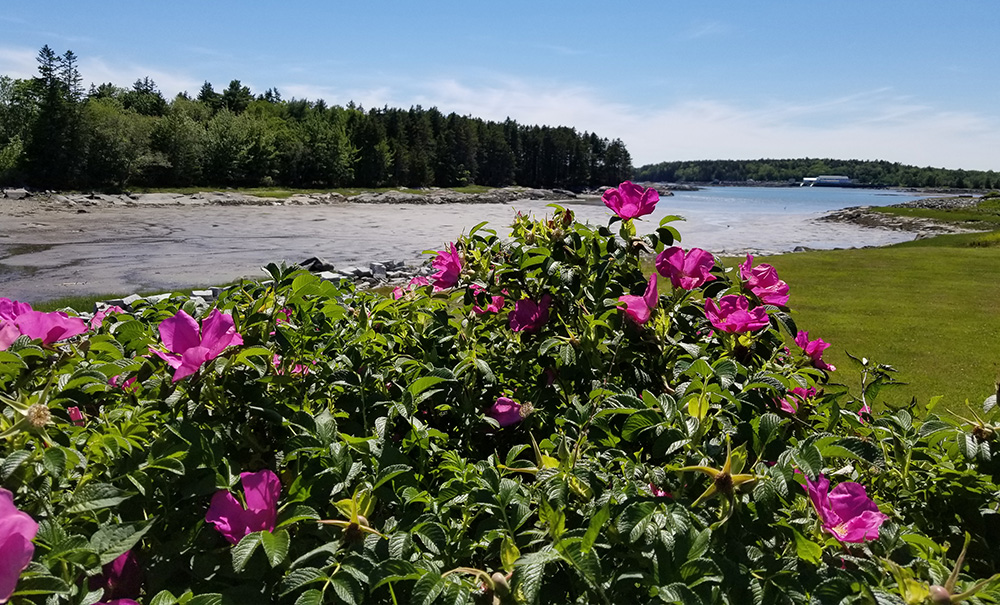
Clark Island includes a mix of mowed fields, forests, and coastal wetlands—nearly all of which were heavily altered during the 1800s and 1900s due to extensive quarrying. The shoreline features sand and cobble beaches, fringing salt marsh, mudflats, and granite ledge.
Maritime spruce-fir forest and mixed hardwood with numerous vernal pools cover the island. Once entirely cleared of trees while quarrying was ongoing, all forest growth is second- and third-growth
There are two small human-made ponds on the preserve; one set back from the east-facing cobble beach on Clark Cove, and one in the field just across the road which bisects the island.These ponds are hydrologically connected via a brushy swale—and are great places to spot birdlife!
Watch your step: Off-trail areas contain numerous old wells, foundations, sections of heavy cable, and other potential hazards.
A Rich History
Clark Island was Wabanaki territory. European settlement of Clark dates back to the 1780s, with quarrying operations beginning in the 1830s. By 1890, 100 stone cutters and their families, plus supporting crews of quarrymen and sculptors, lived on Clark Island. In 1892, the town of St. George paid for a granite causeway from the mainland to Clark Island, and by 1900, 400 people—300 of them stone cutters—were employed in the quarry operation. By World War II, operations slowed and then ceased, as concrete and steel building materials replaced stone.
Today the island is mostly undeveloped with just two remaining residences off the preserve, but old foundations are still plainly visible. A section of the eastern shoreline is constructed of granite wharf, where large ships once tied up to load quarried stone. Two large, abandoned granite quarries remain on the island, one of which is within the preserve.

Stories from the Midcoast
Deepening Our Connections to Nature and One Another
Our stories remind us why we commit ourselves to the work of conservation. Here in Maine, nature is still big and bold enough to remind us that we are part of it. We want to make sure this remains true.
Be part of the movement

Contribute to a future with
healthy, open lands & waters
Donate Now

Give your time to help
care for the coast
Volunteer Now

Be a champion
for conservation
Spread the Word
More Information on Clark Island
Help Us Take Care of the Preserve
This preserve belongs to all of us; that’s why it’s important to leave as little trace as possible when you visit.
To do that, please:
- Carry out all trash
- Carry out all pet waste
- Carry out all human waste (including toilet paper)
Parking on the Island
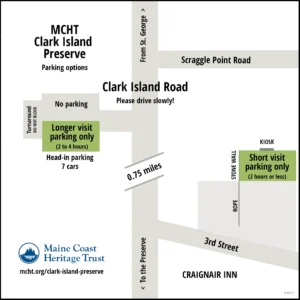
Please respect our neighbors and good partners at the Craignair Inn and do not park in spots reserved for Inn guests and patrons, or on the shoulder of Clark Island Road. Doing so may result in towing.
Parking Options
Weekday and shorter visits: There are eight signed and designated spots at the rear of the Craignair Inn parking lot on either side of the kiosk.
Overflow and longer term: 0.75 miles back up Clark Island Road on the west side.Turn into the gravel driveway across from the Wheeler Bay Refuge fence and park facing the left side of the concrete slab. Don’t block the turnaround or other vehicles. You may also park around the entrance as long as you’re not blocking the road. Parking is dawn to dusk only and at your own risk; this is not a monitored lot and has been made available through the generosity of a local landowner.
Craignair Inn patrons should park in the rest of the lot, though are welcome to visit the preserve without moving their cars.
Thank you in advance for driving slowly and courteously – Clark Island Road residents appreciate it!