Notes from the Coast Spring 2024
In “Notes from the Coast,” we delve into a particular topic
area, share thoughts and questions we’re exploring at Maine
Coast Heritage Trust, and celebrate the good work you’re
making possible.
Kate Stookey
MCHT President and CEO
THE GUIDING QUESTION
How can we most effectively support Maine communities to adapt to and prepare for the impacts of climate change?
Maine Coast Heritage Trust conserves lands and waters to sustain healthy ecosystems along the coast. As increased development and a changing climate further stress these life-sustaining ecosystems, our work becomes increasingly important. We expect to see more frequent and severe weather events like the series of January storms that washed out roads and working waterfronts and devastated local economies up and down the coast.
As towns advance building and rebuilding efforts in the wake of this year’s storms, we are working with them to ensure the protection of ecologically valuable areas that could help limit future damage to infrastructure and to sustain local economies.
MCHT’s coast-wide initiatives to conserve coastal watersheds—like rivers and marshes—protect biodiversity, reduce flooding, and help to limit damage to infrastructure. We are accelerating these initiatives. Over the coming years, we will focus increasingly on conserving large, interconnected natural areas that serve as important carbon sinks and provide plants and animals the room they need to migrate and adapt, and we will continue to serve as a resource to coastal towns as they think about land.
What more could or should we be doing? Across the state, what information and resources do towns need to build resilience? How can we help advance adaptation plans that prioritize nature-based solutions?
What do you think?
Please share your thoughts and questions with me!
THE MOMENT OF INSPIRATION
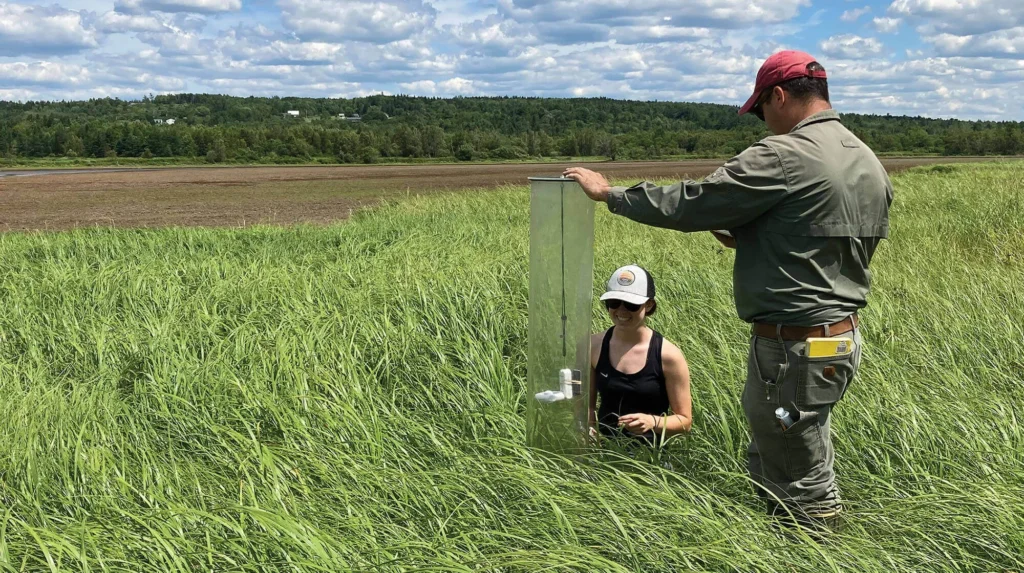
Bates College’s Jamie Hollander, student, and Phil Dostie, Laboratory Manager, collect samples from the Middle River Park in Machias (owned by Downeast Coastal Conservancy) to understand the role tidal marshes, like this one, play in sequestered carbon. In addition to contributing to this effort, Maine Coast Heritage Trust is working with the town to replace the current Machias Dike that spans the Middle River with a design that allows for unimpeded fish passage and marsh restoration.
A PARTNER I’D LIKE YOU TO MEET
Bill Kitchen
Town Manager, Machias
“Three rivers, two salt marshes, a dike and causeway, the Sunrise Trail, a wastewater treatment plant, public park space, a boat ramp, our commercial downtown, and the very top of the Machias Bay all come together in one tempest of a spot,” says Bill Kitchen, who was shocked by the speed with which the bay covered Route 1, the dike, and the low-lying section of downtown Machias during last January’s storms. “We’re faced with a very complex scenario, made more urgent by the increasing frequency and ferocity of storm events.”
Bill is working on numerous projects to mitigate future flooding and better prepare the town for sea-level rise and coming storms. On some of these projects, he’s working with MCHT staff to protect and improve the ecological function of key natural areas. “It’s critical that every project is working with the same assumptions, and that we’re leveraging the synergies, and challenges, these many projects present,” says Bill. “Quite simply, having MCHT as an expert partner is invaluable to Machias’s future.”
DID YOU KNOW?
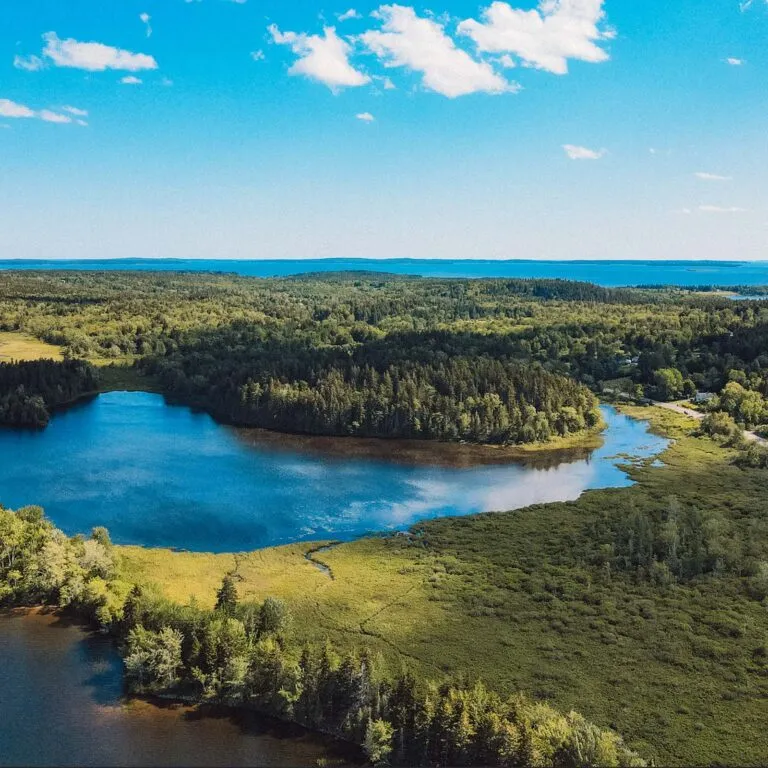
Maine receives the equivalent value of more than $14 billion in benefits to people and communities per year from its natural environment. For example: forests filtering stormwater runoff, and wetlands minimizing flood damage.
Just one acre of average Maine forest holds carbon equivalent to the emissions from the annual energy use of more than 50 homes. One acre of marshland sequesters roughly ten times as much.
Precipitation from extreme events in the Gulf of Maine region has increased 74 percent since 1958.
Sea-level in Maine is likely to rise between 3 and 5 feet by the year 2100 based on an intermediate sea level rise scenario.
1. “Valuing Maine’s Natural Capital” 2. The Nature Conservancy, the Blue Carbon Network
3. “Scientific Assessment of Climate Change 4. NOAA
Photo of Middle River Park, Machias: MCHT photo
Photo of Kate: Katherine Emery
Photo of Bill: Courtesy of Bill Kitchen